Green Card Lawyer
Your Path to Permanent Residency Starts Here
Becoming a lawful permanent resident of the United States is a significant milestone that unlocks long-term stability, enhanced employment opportunities, and the ability to build a future with confidence and security. A green card allows you to live and work permanently in the United States and, in many cases, serves as the pathway to U.S. citizenship.
Because the green card process can be complex, time-consuming, and highly technical, working with an experienced green card lawyer can make a significant difference. From determining eligibility to preparing documentation and attending interviews, legal guidance helps reduce delays, avoid mistakes, and strengthen your case.
There is no single path to permanent residency. U.S. immigration law offers several green card categories, each with its own eligibility rules, processing times, and documentation requirements. Selecting the correct category is essential, as applying under the wrong classification can result in unnecessary delays or denials.
A green card attorney can evaluate your background, family relationships, employment history, or victim-based eligibility to identify the most appropriate option. In some cases, applicants may qualify under more than one category, making legal strategy especially important.
The following are the most common ways:
- Family-based green card
- Employment-based green card
- Green card for victim of violence or crime
Table of Contents
Take the First Step Toward Permanent Residency Today!
Family-Based Green Card
Family-based immigration is one of the most common ways to obtain lawful permanent residence. These cases are built on qualifying relationships between U.S. citizens or lawful permanent residents and their eligible family members. However, not all family relationships qualify under immigration law, and preference categories can significantly affect waiting periods.
Immediate relatives of U.S. citizens generally experience faster processing, while preference-based family petitions may involve visa backlogs.
Who can Sponsor a Family Member for a Green Card
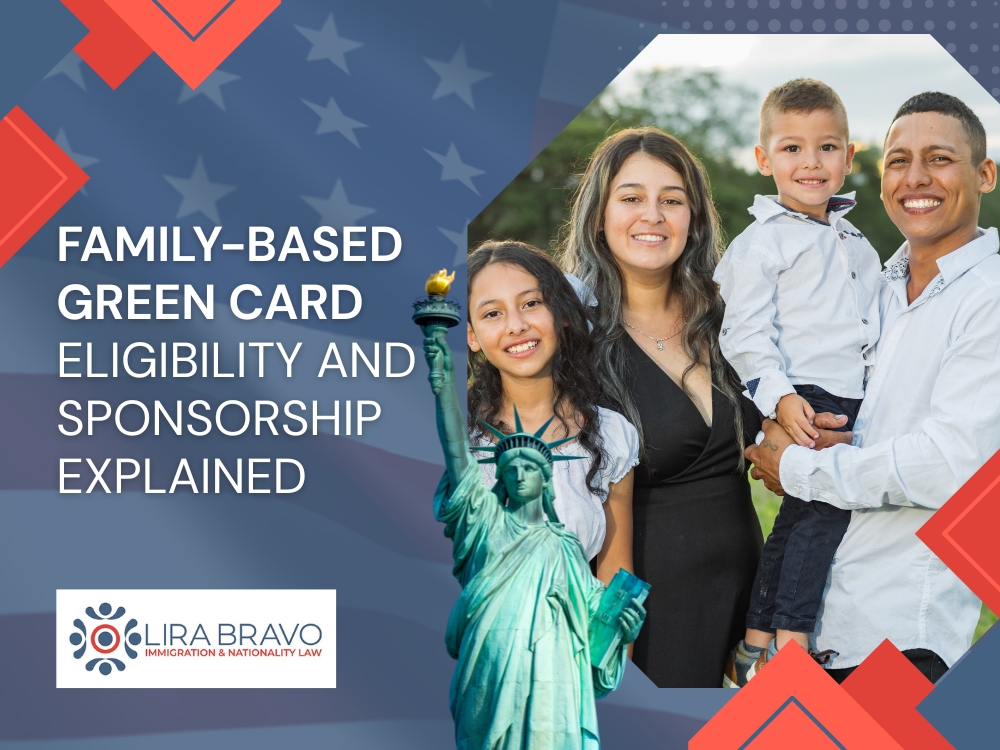
United States Citizens who are 21 years of age can petition for:
- Spouse
- Parents
- Married or single children over the age of 21
- Single children under age 21
- Brothers and Sisters
- Fiancé(e) (through the K-1 visa)
Lawful permanent residents can petition for:
- Spouse
- Unmarried sons or daughters
Consulting a green card attorney before submitting a petition helps ensure that your case is legally viable from the start.
Employment-Based Immigration
Employment-based green cards allow U.S. employers to sponsor foreign nationals whose skills, education, or investment benefits the U.S. economy, creating opportunities for both employers and employees. These cases often involve detailed labor certification requirements, employer compliance obligations, and strict evidentiary standards.
How Long Does It Take To Get a Green Card Through Employment?
Processing times vary widely depending on preference category, country of origin, and visa availability. Timelines can range from months to several years.
Who can become a Legal Permanent Resident through an Employer?
First Preference
- People with Extraordinary Ability
- Outstanding Professors/Researchers
- Managers/Executives
Second Preference
- Advanced Degree Professionals
- Exceptional Ability
Third Preference
- Professionals with Bachelor’s Degrees
- Skilled Workers (two years training)
- Other Workers (unskilled)
Fourth Preference
- Special Immigrants (religious workers)
Fifth Preference
- Immigrant Investors
Start Your Green Card Journey with a
Trusted Immigration Lawyer
Victim of Violence/Crime
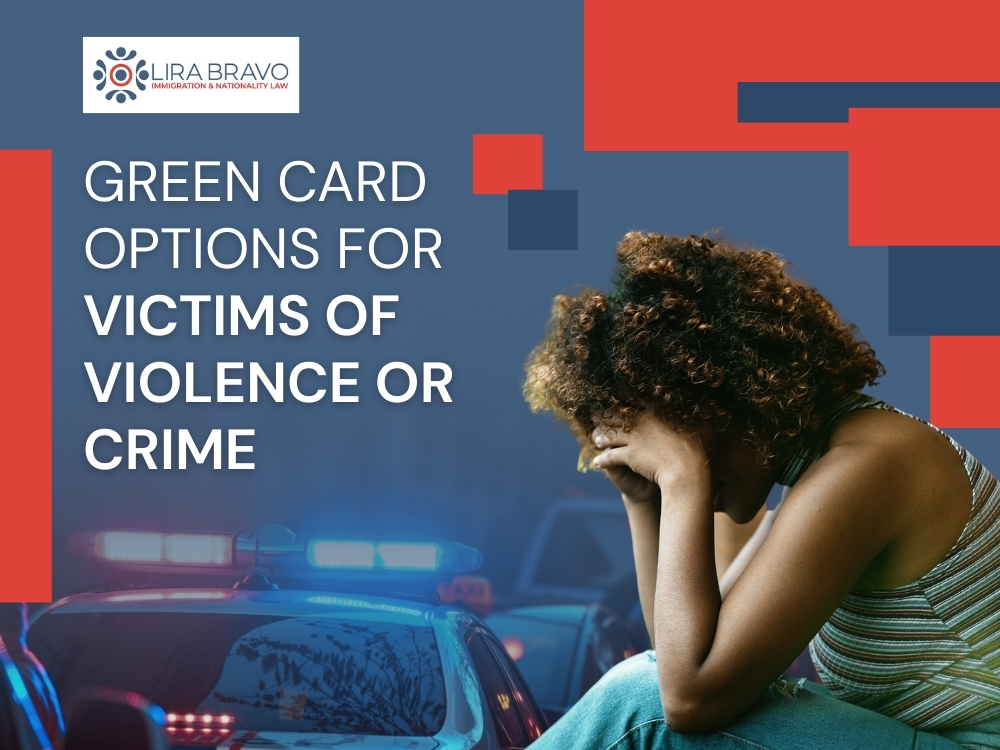
U.S. immigration law recognizes that victims of serious crimes and abuse may require protection and stability regardless of their relationship with the abuser. Victim-based immigration options allow eligible individuals to seek lawful status while cooperating with law enforcement or escaping abusive situations.
These pathways are highly fact-specific and require careful documentation. Working with a compassionate green card attorney ensures that applications are prepared thoroughly while prioritizing safety, confidentiality, and long-term legal security.
U Visa
To qualify, you must show:
- That you have suffered substantial physical or mental abuse from certain criminal activity in the US.
- That you possess information concerning the criminal activity.
- That you assisted government officials in the investigation.
- The criminal activity violated US law or occurred in the US.
Certain criminal activities include: rape, torture, trafficking, incest, domestic violence, sexual assault, abusive sexual contact, prostitution, sexual exploitation, female genital mutilation, being held hostage, peonage, involuntary servitude, slave trade, kidnapping, abduction, unlawful criminal restraint, false imprisonment, blackmail, extortion, manslaughter, murder, felonious assault, witness tampering, obstruction of justice, perjury, or any attempt, conspiracy, or solicitation to commit any of the aforementioned crimes.
Violence Against Women’s Act
The Violence Against Women Act (VAWA) allows an abused spouse or child of a U.S. Citizen or Lawful Permanent Resident, or an abused parent of a U.S. Citizen, to self-petition for lawful status in the United States, obtain employment authorization, and access public benefits. VAWA provides domestic violence survivors with the essential resources to escape violence and establish safe, independent lives.
If you have been a victim of domestic violence by an abusive spouse who is a U.S. Citizen or green card holder, you may qualify for residency through VAWA.
Both U visas and VAWA petitions allow eligible applicants to seek lawful permanent residence without relying on an abusive family member. These protections are designed to empower survivors to escape abuse without the risk of losing their status.
Secure Your Future in the U.S. with a
Green Card Lawyer
Frequently Asked Questions to Green Card Lawyers
“How long does it take to get a green card?”
The time it takes to get a green card depends on the type of application and the applicant’s country of origin:
- Immediate relatives usually face shorter processing times since there are no annual visa limits for this category.
- Family-based and employment-based applications can take anywhere from 6 months to over 10 years due to visa quotas and backlogs.
- Humanitarian visas often involve longer waits because of high demand.
“If my green card is denied, can I apply again?”
You can usually apply again if your green card was denied. USCIS doesn’t automatically stop you from trying. The reason your first application was denied, such as missing documents or not meeting eligibility, will determine what you need to fix before reapplying. If your green card was denied, it’s best to speak with an experienced green card attorney. They will assess your situation and denial reason and can advise you if reapplying is the best way forward.
“What are the common green card interview questions?”
Common green card interview questions include verifying your identity, relationship to a sponsor (for family-based applications), employment details (for work-based applications), and background information like travel, criminal history, or previous immigration issues. When you work with a green card lawyer, they will prepare you for green card interview questions specific to your case.
Schedule a Consultation with a Green Card Attorney Today!
If you are ready to pursue lawful permanent residence, now is the time to speak with a knowledgeable green card attorney. Our team is committed to helping you understand your options and navigate the process effectively. Call today to schedule your consultation and begin your path toward permanent residency.