Special Immigrant Juvenile Status Lawyer
Learn about SIJS requirements, juvenile court orders, green card eligibility, and how our experienced immigration lawyer can help protect your future.
Children who have suffered abuse, neglect, or abandonment deserve the chance to build a stable future. But young immigrants facing these circumstances may also struggle with uncertainty about their immigration status and their future in the United States.
Special immigrant juvenile status, or SIJS, provides a path forward for qualifying children. The team at Lira Bravo Law, PLLC, is passionate about protecting vulnerable children and helping them pursue a safer, more stable future. Book a consultation to discuss your situation.
Table of Contents
Protect Their Future. Explore SIJS Options with Lira Bravo Law Today.
What Is Special Immigrant Juvenile Status?
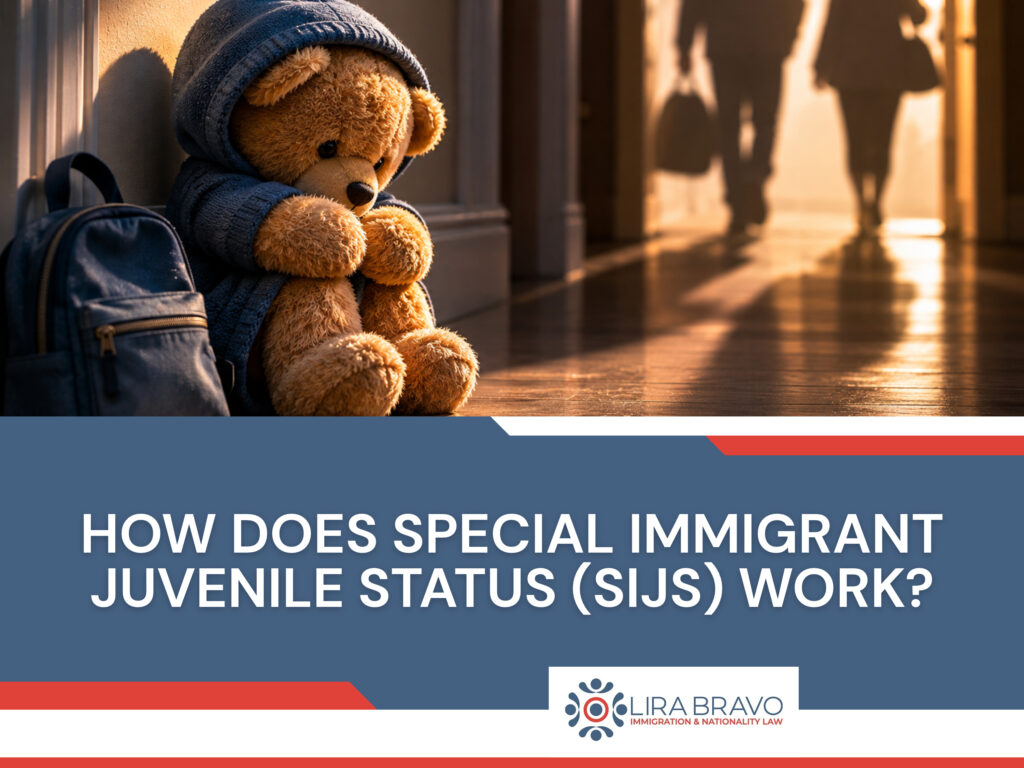
Special immigrant juvenile status is an immigration classification reserved for unmarried young people who have suffered parental abuse, neglect, or abandonment. It lets qualifying individuals seek lawful permanent residence, even if they’d otherwise face significant immigration challenges that may result in removal.
SIJS does not automatically result in a green card or lawful immigration status. The process goes through the state courts, which make findings regarding a child’s welfare, and USCIS, which determines whether someone meets SIJS requirements.
SIJS Requirements: Who Qualifies for SIJS Immigration Protection?
There are several key SIJS requirements that you must satisfy to be considered.
Age, Marital Status, and Residency
To qualify, an applicant generally must:
- Be under 21 years old when filing a petition.
- Be unmarried when filing and when USCIS adjudicates the petition.
- Be physically present in the United States.
- Have a qualifying order from a state court with jurisdiction over juvenile custody or dependency matters.
Federal immigration law permits filing before age 21, but state court jurisdiction may end earlier. Relevant proceedings generally involve minors under 18, so it’s important to talk to a special immigrant juvenile status lawyer early.
Abuse, Neglect, or Abandonment by a Parent
A qualifying state court must determine that reunification with one or both parents is not viable due to abuse, neglect, abandonment, or a similar basis. Both parents don’t have to be responsible for the mistreatment.
How the SIJS Immigration Application Process Works
Getting this status requires going through several stages.
Step 1: Get a Qualifying State Court Order
An applicant must have a state court order authorized to make decisions about a child’s care. The order must contain the required findings about dependency or custody, parental reunification, and the child’s best interests. It must also find that returning to the applicant’s or parents’ country of nationality or last habitual residence is not in the child’s best interests.
Step 2: File Form I-360 with USCIS
After getting the necessary court order, the applicant can submit Form I-360, Petition for Amerasian, Widow(er), or Special Immigrant, with the necessary supporting evidence. USCIS then reviews the petition to determine whether the requirements are satisfied.
Approval establishes classification but does not independently provide lawful status or work authorization. In the past, USCIS automatically considered those with SIJS for deferred action, a temporary protection from deportation. That policy ended in 2026. For SIJS petitions filed on or after May 10, 2026, consideration is no longer automatic.
Step 3: Apply for a Green Card
Qualifying applicants can pursue lawful permanent residence through Form I-485, Application to Register Permanent Residence or Adjust Status, when an immigrant visa is available. Applicants fall under the EB-4 visa category, and visa availability depends on the monthly Visa Bulletin and priority date.
Give Vulnerable Children a Path Forward. Get SIJS Legal Guidance Today.
The Benefits and Limitations of SIJS
The primary benefit of SIJS is an eventual pathway to a green card and even U.S. citizenship. Additionally, there are certain adjustment of status provisions for SIJS that help applicants overcome immigration barriers that otherwise prevent people from obtaining a green card.
Unfortunately, certain limitations do apply:
- SIJS approval doesn’t automatically protect someone from removal.
- Employment authorization is not automatically available based solely on approved SIJS
- EB-4 visa backlogs can significantly delay green card applications.
- Those who get permanent residence through SIJS cannot later sponsor their biological or prior adoptive parents for immigration benefits based on that relationship.
Understanding these limitations helps families make informed decisions about their immigration options.
Why You Should Choose Lira Bravo Law’s Special Immigrant Juvenile Status Lawyers
SIJS cases can be particularly complex because of the interplay between state courts and federal immigration requirements. Unintentionally missing an age-related deadline or getting a court order without the necessary findings can jeopardize your eligibility before you’ve truly had a chance to start the process.
The special immigrant juvenile status lawyers at Lira Bravo Law can help evaluate eligibility, coordinate the necessary documentation, prepare the federal petition, and explain the path to permanent residence.
Our team brings substantial experience in humanitarian immigration matters and cases involving vulnerable young people. We approach each case with individualized attention and a deep understanding of what is at stake for our clients.
Reach Out to Lira Bravo Law Today
Young immigrants who have faced difficult family circumstances shouldn’t also have to worry about losing their path to stability in the United States. Because court jurisdiction, age restrictions, and strict legal findings can affect SIJS eligibility, seeking legal advice early is important. Contact Lira Bravo Law now to schedule a consultation with an immigration lawyer.